


Every run this spring ended the same way: mile 5, nothing left in the tank. I'd gone out too hot — again — and the music, the thing that was supposed to help, was cheering me on into the wall. Here's how I fixed it, and what it turned into.
Every run this spring ended the same way.
Mile 5. Nothing left in the tank. Every time.
For a while I did what everyone does - blamed my legs, blamed the heat, blamed the drinks the night before. Then I looked at my splits and found the actual culprit: me, going out too hot, with the music cheering me on into the wall. A big song hits at half a mile in, and I surge. Another at mile three, I pick it up again. By mile five, the playlist is still going strong, and I’m cooked.
The music wasn’t the soundtrack to the blowup. It was an accomplice.
Here’s the thing you should know about me: I’m not an elite runner. I’m a lifelong athlete - I swam at a nationally ranked level, which means pacing was beaten into me one repeat at a time - and I’m a builder. Swimmers learn early that races are won on the back half. Go out controlled, finish faster than you started. The negative split. Every coach I ever had preached it. Every playlist I ever ran to ignored it.
So I built the tool I couldn’t find…
I mapped BPM to the effort curve of the run itself. Not a mood - a chart. It opens deliberately unexciting, holding you back while your body figures out it’s running. It settles into a steady cruise that should feel almost boring (that’s the point). There’s a dip built into the middle - the tempo actually pulls back, on purpose - so you don’t redline halfway through. Then the build starts right around the moment your legs begin negotiating, and the peak is saved for the last hard stretch, when you need someone yelling in your ear.
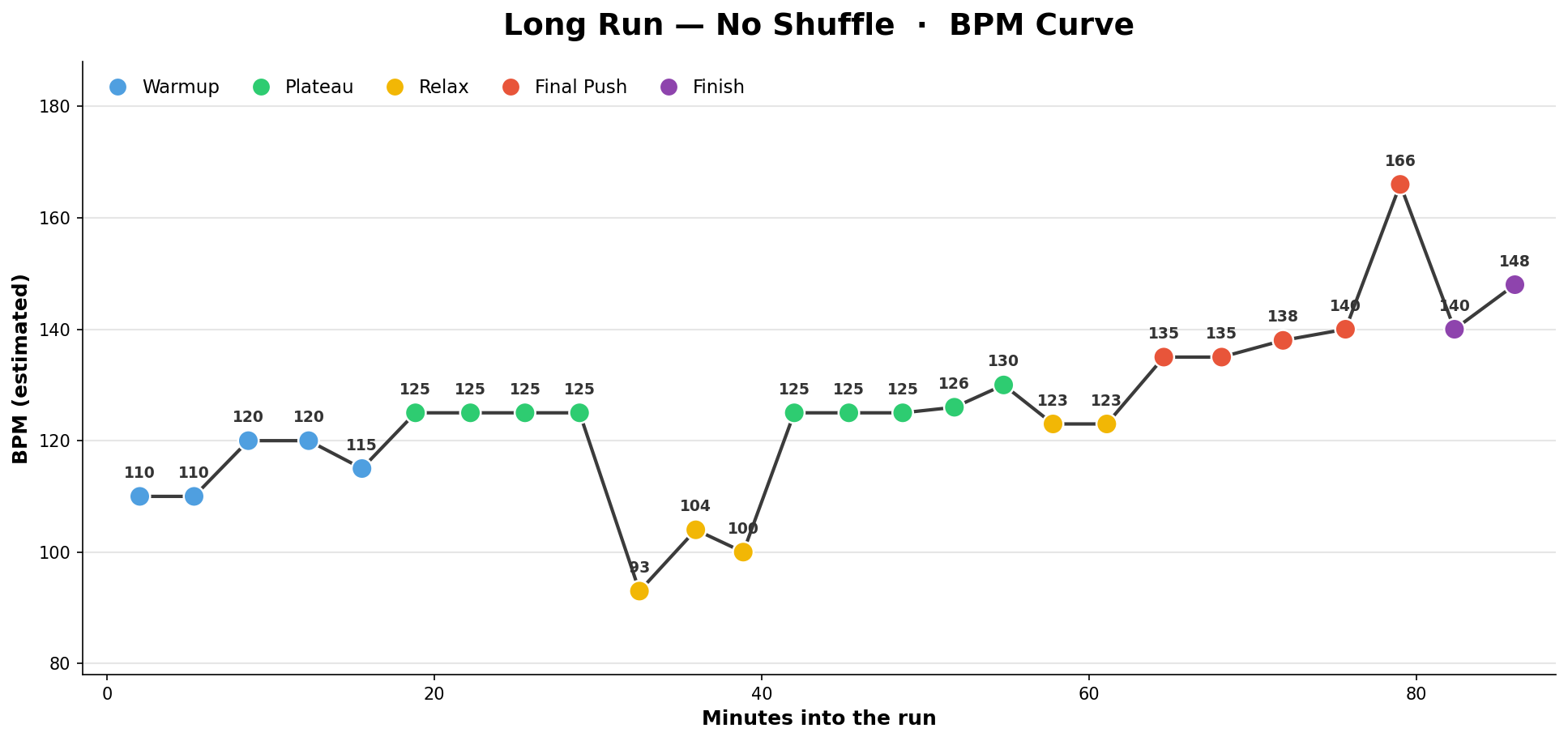
Then I tested it on myself. I engineered a long-run playlist to negative-split and went out and ran the back half faster than the front. That’s when I knew it worked. The back half pulls you forward instead of you dragging it.
That’s the whole origin story. I kept blowing up, so I built the thing to babysit my pacing. It holds me back at mile 2 so mile 5 belongs to me.
The training update: November is the NYC Marathon - my first. Mile 7 and I are on better terms these days. Not friends. Terms. The longest I’ve ever run was 10 miles, and I’ve spent a better part of the past nine months rehabbing an Achilles injury, so it feels like a painfully long road back. But I can see the finish line in my head.
Here’s what’s coming. Wednesday, the full engineered library drops - Long Run, Tempo, Easy Miles - each one charted to what that specific run actually asks of you. Same day, I open the first 100 founding memberships. That’s two days from now, and I’ll have the full details then.
If you want to start today, the starter playlist is free and stays free: Go Run — No Shuffle. Run it in order. No shuffle - that’s the whole point.
Everything lives at readopentabs.com
— Randy
On the Run. This is my experience as an athlete, operator, and first-time marathoner - a pacing tool I built and use, not coaching or medical advice.